Backyard Learning Center
Learn practical backyard skills one project at a time through beginner-friendly articles, seasonal tips, and step-by-step guides that help you build, grow, raise, and thrive.
Companion Planting Made Simple
Which Vegetables Grow Best Together?
(July 2026 – Estimated Reading Time: 8 Minutes)
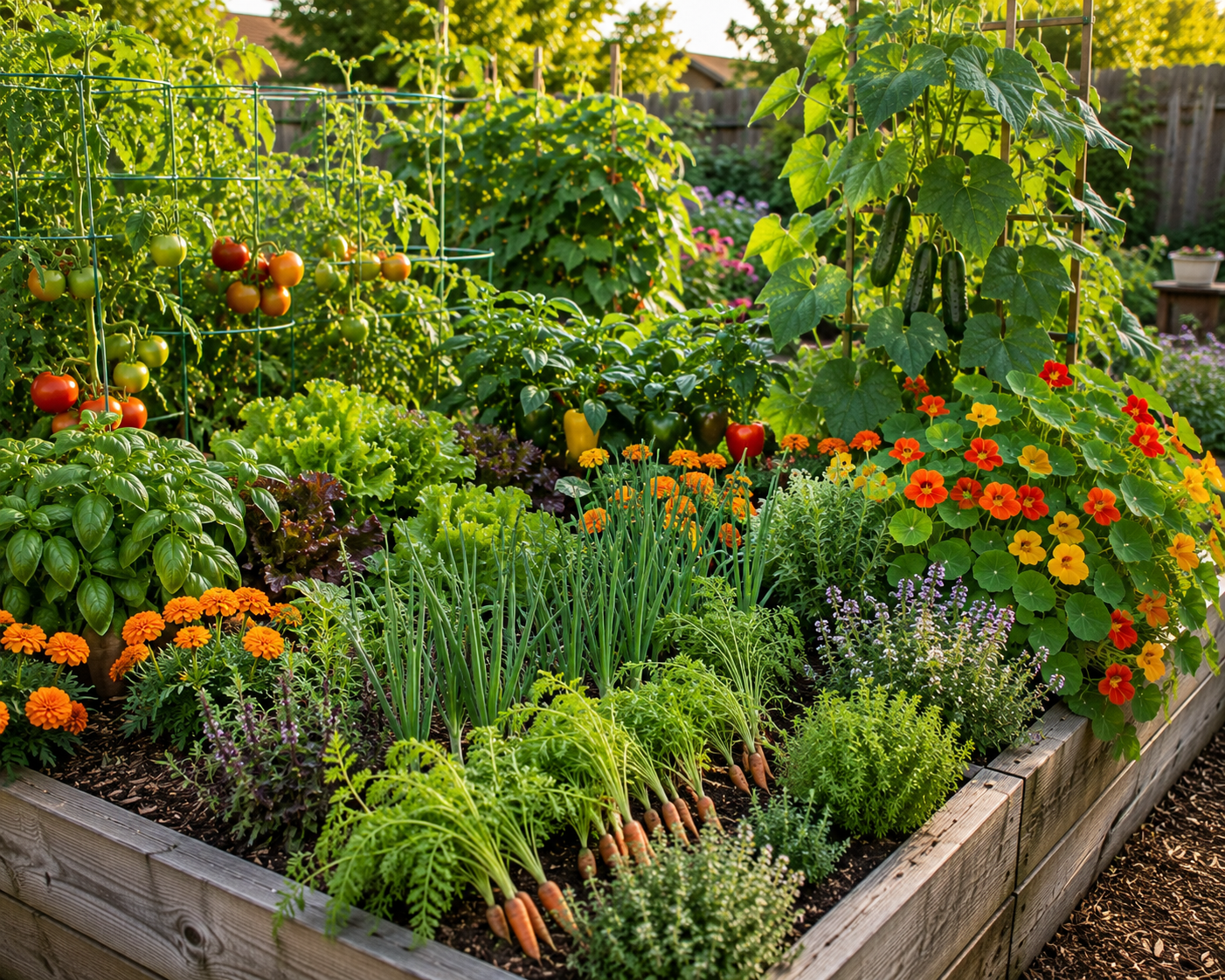
One of the oldest gardening techniques is also one of the simplest.
It’s called companion planting.
The idea is straightforward: certain plants naturally help each other grow better when they’re planted close together. Some attract beneficial insects. Others repel common pests. A few improve the soil or provide shade for neighboring plants during the hottest part of the summer.
While companion planting isn’t magic, it can make your raised bed garden healthier, more productive, and easier to maintain.
The best part?
You don’t need complicated charts or dozens of rules to get started.
A handful of proven plant partnerships can make a noticeable difference in your garden this season.
What Is Companion Planting?
Companion planting is simply growing two or more plants together because each benefits the other in some way.
These benefits may include:
- Attracting pollinators
- Repelling insect pests
- Improving soil health
- Conserving moisture
- Providing shade
- Making better use of garden space
Nature rarely grows a single plant all by itself.
Walk through a meadow or woodland, and you’ll find countless species growing together. Each contributes something to the environment.
Your vegetable garden can work much the same way.
Why Raised Beds Are Perfect for Companion Planting
Raised beds make companion planting especially effective because everything grows in a concentrated space.
Instead of long rows stretching across a large garden, vegetables, herbs, and flowers grow close enough to interact naturally.
Pollinators move easily from one plant to another.
Beneficial insects find shelter.
Strong scents help confuse pests searching for their favorite crops.
The result is a healthier, more balanced garden.
Let’s look at some of the easiest combinations to grow.
Tomatoes and Basil
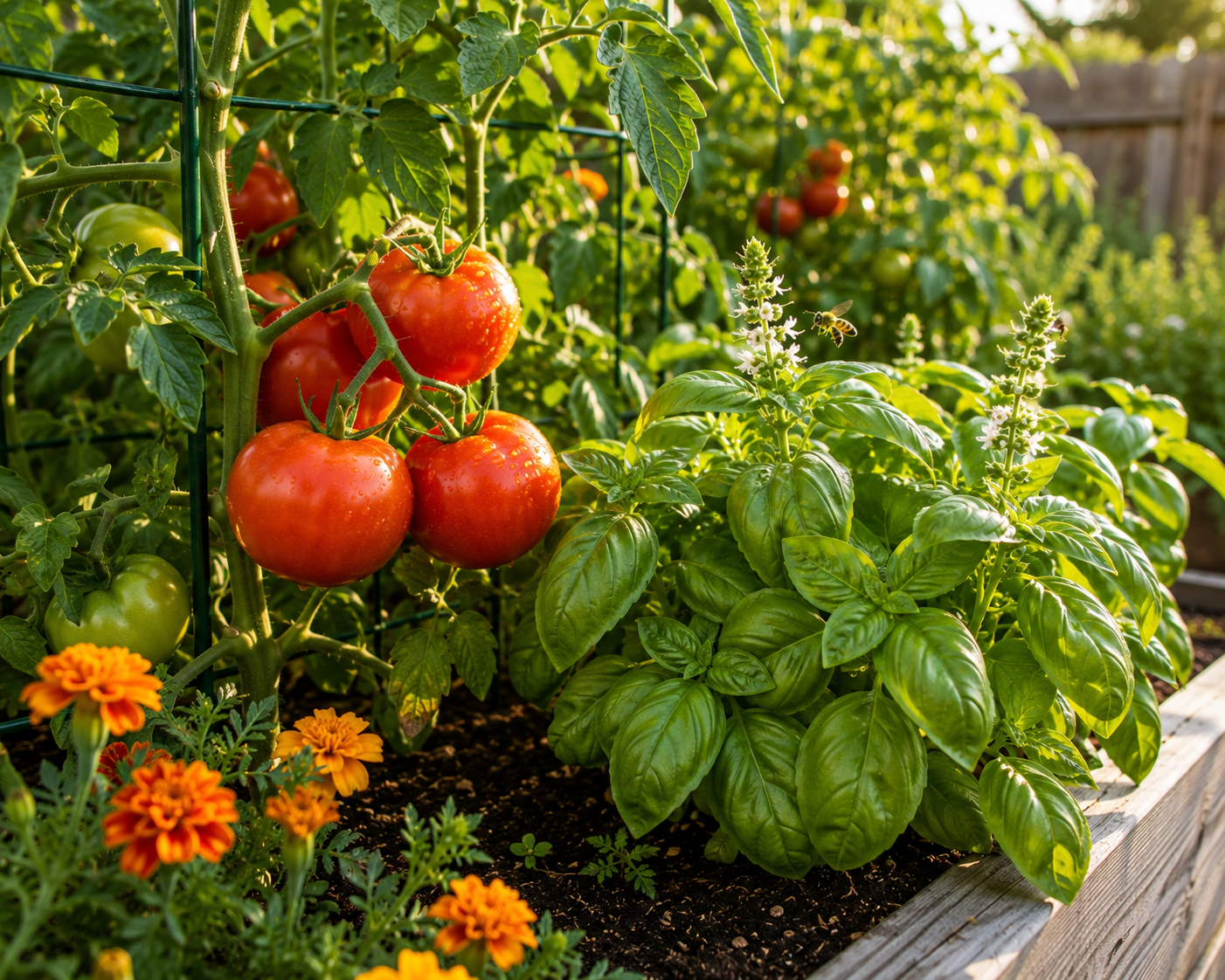
This may be the most famous companion planting pair of all.
Gardeners have grown basil alongside tomatoes for generations.
Basil attracts bees and other pollinators while its strong aroma may help confuse certain insect pests looking for tomato plants.
The pairing also makes perfect sense in the kitchen.
Fresh tomatoes and fresh basil often end up in the same recipes, so harvesting both from the same raised bed is wonderfully convenient.
When planting:
- Place basil about 10 to 12 inches from tomato stems.
- Avoid crowding.
- Allow plenty of airflow around tomato plants.
Even if basil provided no gardening benefits at all, its wonderful fragrance alone makes it worth planting.
Carrots and Onions
Carrots and onions help one another in an interesting way.
The scent of onions can discourage carrot flies, while carrots may help confuse onion flies.
Neither plant occupies much above-ground space, allowing both to share the same raised bed comfortably.
Since onions grow upright and carrots develop underground, they make efficient use of available space.
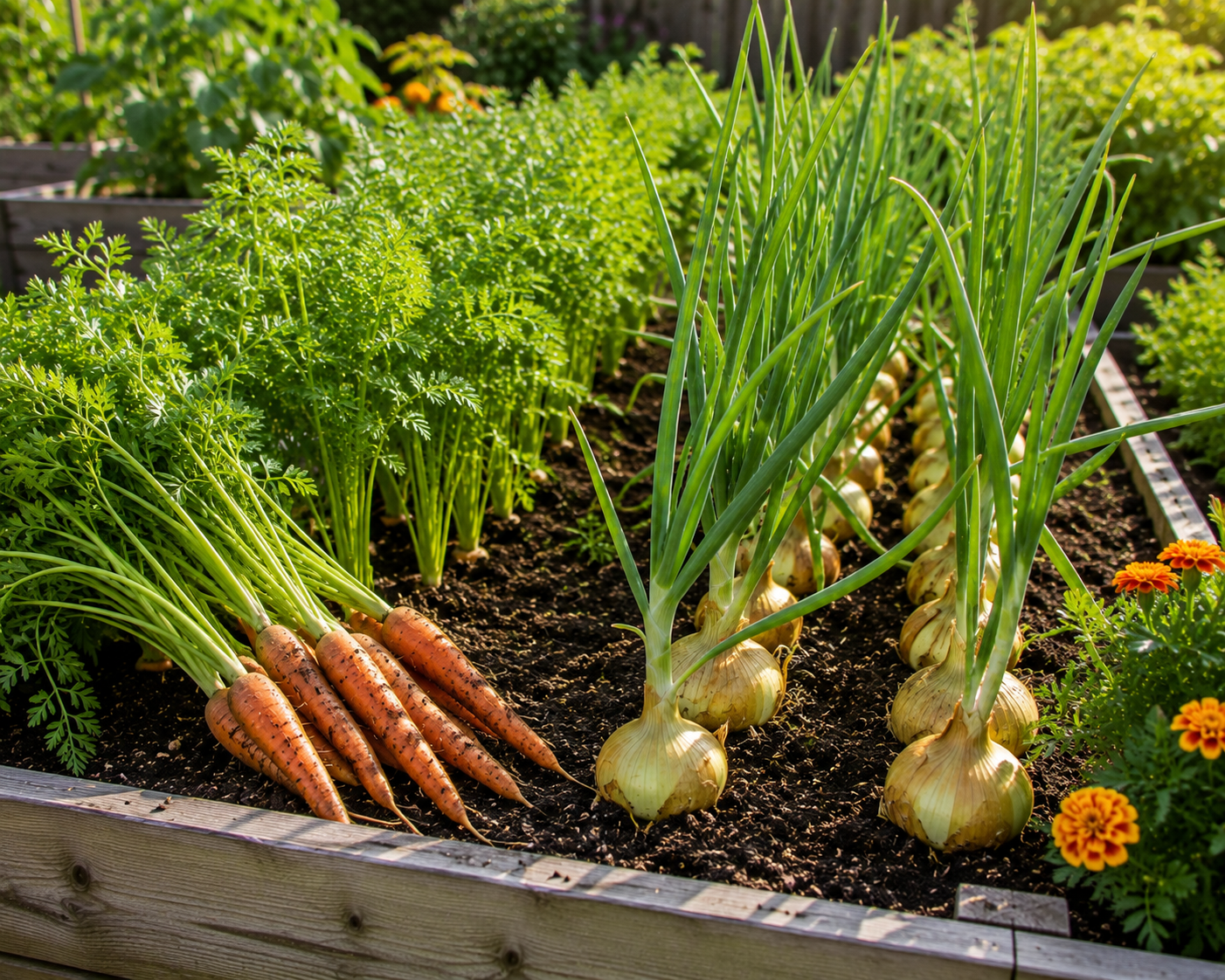
Both crops also enjoy similar growing conditions:
- Full sun
- Loose soil
- Moderate watering
It’s a simple partnership that’s easy for beginners to grow.
Cucumbers and Nasturtiums
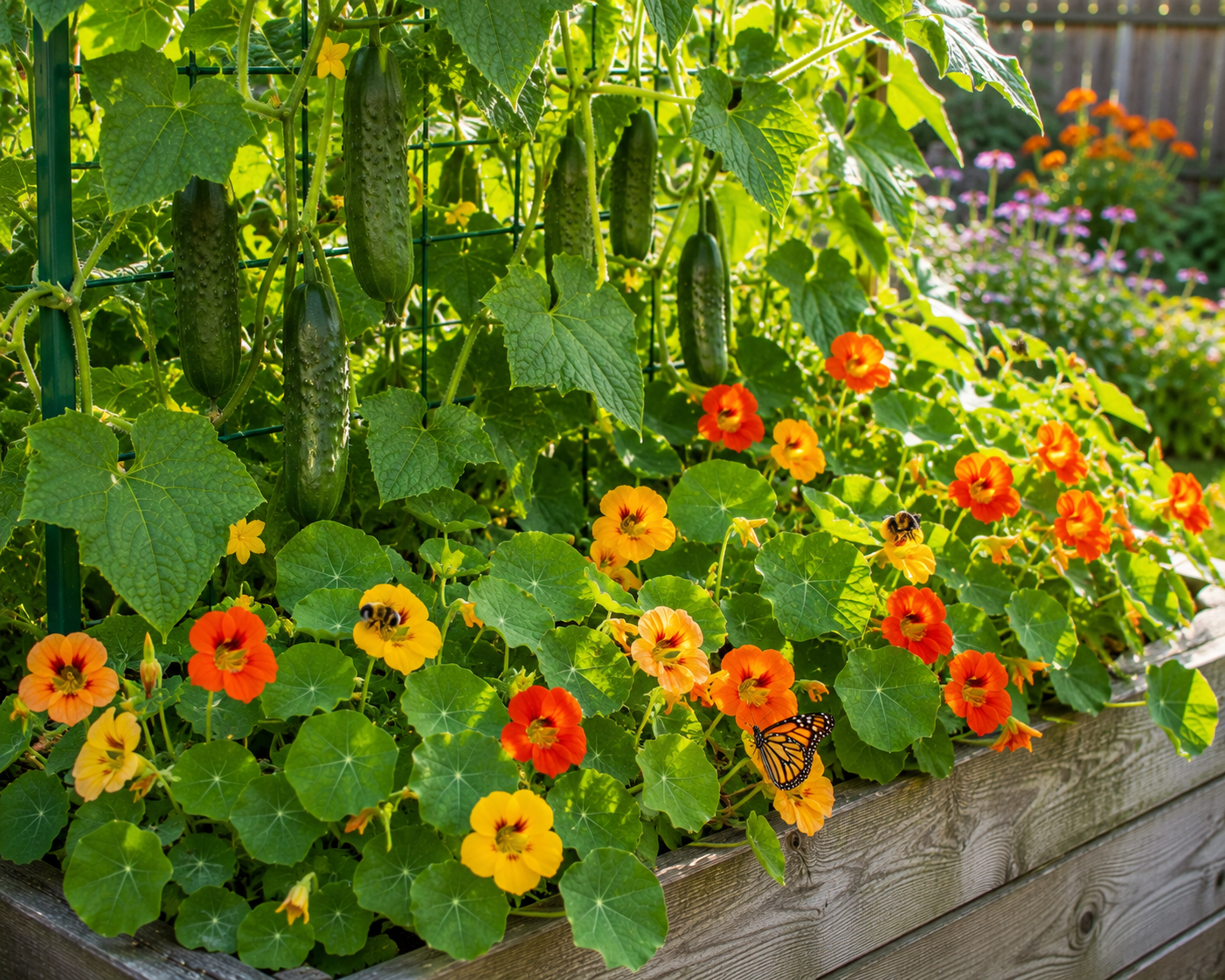
Nasturtiums are among the hardest-working flowers in the vegetable garden.
Their colorful blooms attract bees, butterflies, and other pollinators that improve cucumber production.
They also act as what’s sometimes called a “trap crop.”
Certain insect pests are more attracted to nasturtiums than cucumbers, helping reduce damage to your vegetable plants.
As an added bonus, nasturtium flowers are edible.
They add a slightly peppery flavor and bright color to fresh salads.
Beans and Corn
This partnership has been used for centuries.
Pole beans naturally climb corn stalks, eliminating the need for separate trellises.
Meanwhile, beans add nitrogen to the soil through a partnership with beneficial bacteria living on their roots.
Corn benefits from the improved soil while providing sturdy support.
If you have enough room, consider adding squash beneath them.
This famous combination, often called the “Three Sisters,” has been grown by Indigenous peoples in North America for generations.
The squash spreads across the ground, helping shade the soil and reduce weeds.
Lettuce and Taller Vegetables
Lettuce prefers cooler temperatures than many summer vegetables.
As tomatoes, peppers, or pole beans grow taller, they provide light afternoon shade that helps lettuce remain productive longer into the season.
This natural shade can delay bolting, which is the process where lettuce sends up a flower stalk and develops a bitter taste.
Plant lettuce around the edges of larger vegetables early in the season.
By the time the larger plants reach full size, the lettuce will often be ready to harvest.
Radishes and Cucumbers
Radishes mature quickly.
Cucumbers take much longer.
Planting radishes between young cucumber plants makes excellent use of space.
The radishes are harvested long before cucumber vines begin spreading.
Some gardeners also believe radishes discourage cucumber beetles, although results vary depending on location.
Even without that possible benefit, this pairing makes efficient use of every square foot in your raised bed.
Peppers and Herbs
Many herbs make excellent neighbors for peppers.
Consider planting:
- Basil
- Oregano
- Thyme
- Parsley
- Chives
These herbs attract beneficial insects while requiring relatively little space.
Their flowers provide nectar for pollinators, and many continue producing throughout the growing season.
Having fresh herbs growing beside your peppers also makes meal preparation much more enjoyable.
Marigolds Almost Anywhere
If there were an award for the hardest-working flower in the vegetable garden, marigolds would be strong contenders.
They’re colorful.
They’re easy to grow.
They bloom for months.
Most importantly, they attract pollinators and beneficial insects while adding beauty throughout the garden.
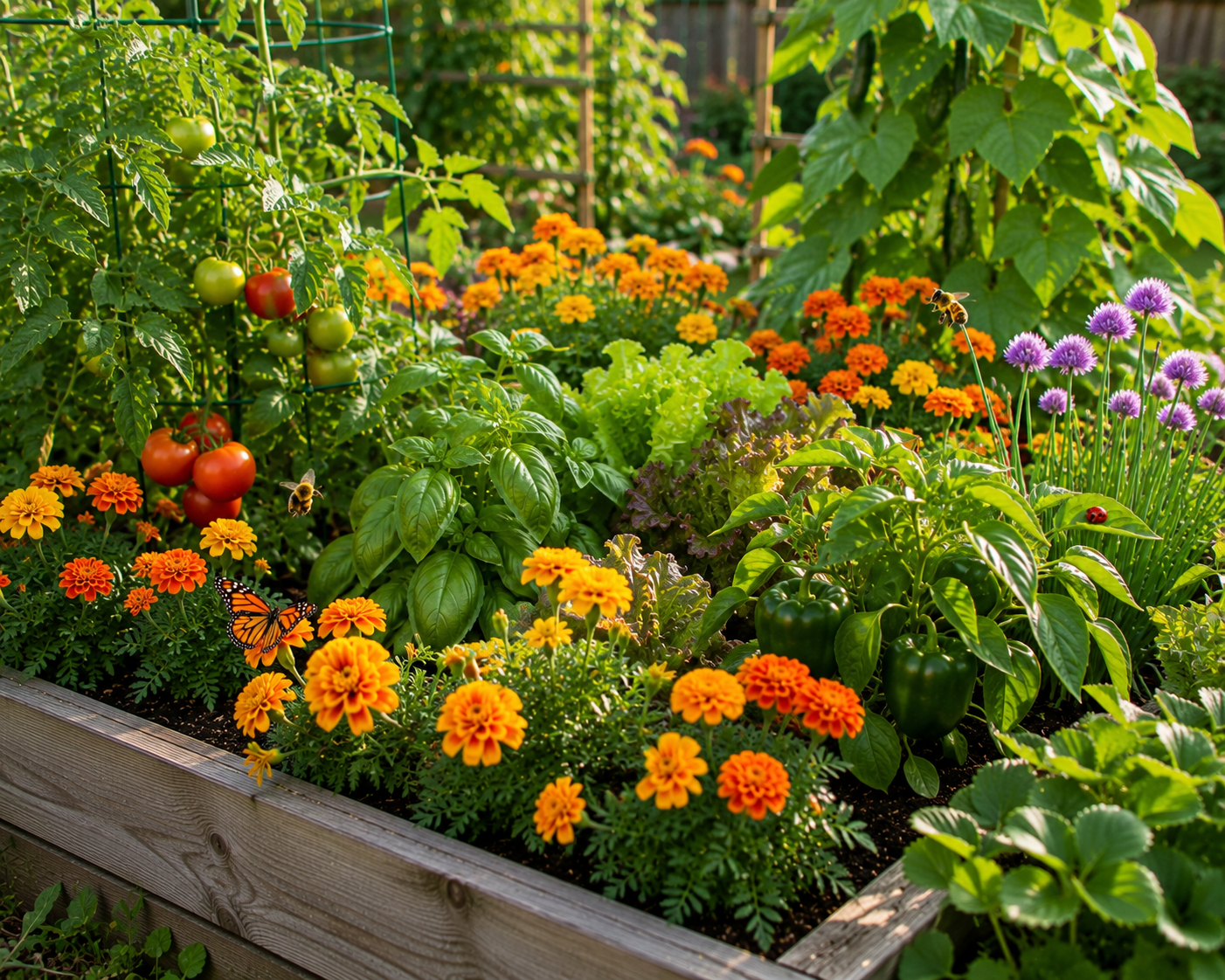
Some studies also suggest certain marigold varieties may help reduce harmful soil nematodes over time.
Whether or not that benefit appears in your particular garden, marigolds deserve a place among your vegetables simply because they attract so many helpful insects.
Plant a few throughout every raised bed.
Your garden will be brighter because of them.
Herbs That Welcome Pollinators
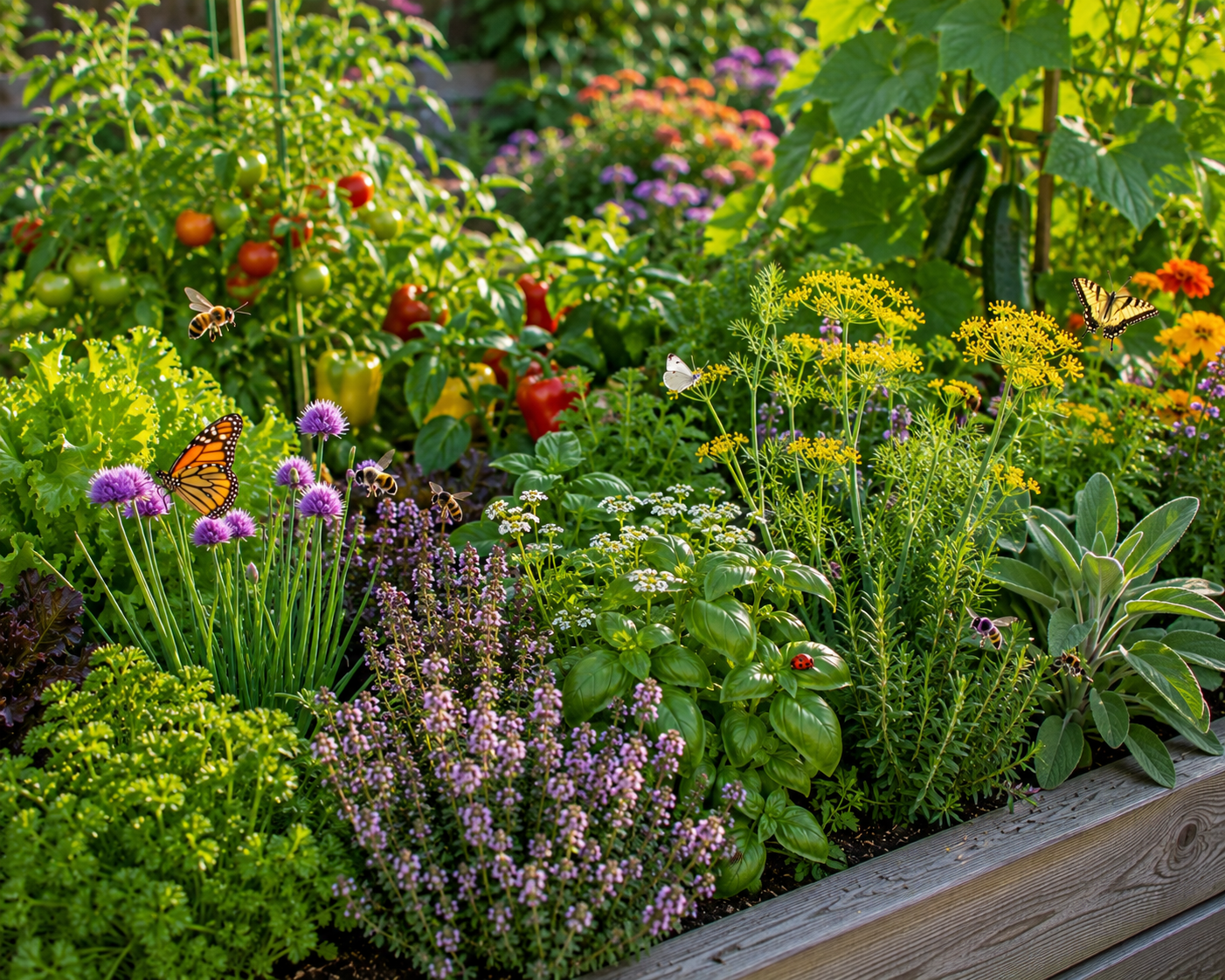
Pollinators play a vital role in vegetable production.
Without bees and other pollinating insects, many vegetables would produce fewer fruits.
Flowering herbs are excellent pollinator magnets.
Some of the best include:
- Dill
- Cilantro
- Chives
- Thyme
- Oregano
- Sage
Allowing a few herbs to flower can turn your raised bed into a busy destination for bees throughout the season.
The more pollinators visiting your garden, the better your chances of abundant harvests.
Plants That Should Stay Apart
Not every combination works well.
While gardening advice sometimes differs, these pairings are generally worth avoiding.
Tomatoes and Potatoes
Both belong to the same plant family and are susceptible to many of the same diseases.
Keeping them separated reduces the chance of problems spreading.
Beans and Onions
Onions, garlic, and other members of the onion family may slow bean growth.
Plant them in separate sections of the garden when possible.
Fennel and Almost Everything
Fennel is famous for being a poor companion.
It tends to compete aggressively with many vegetables.
Most gardeners grow it in its own area.
Don’t Overcomplicate Companion Planting
One mistake many beginners make is trying to memorize enormous companion planting charts.
Fortunately, that’s unnecessary.
Focus on a few simple ideas:
Grow flowers among your vegetables.
Include herbs throughout the garden.
Mix fast-growing crops with slower ones.
Avoid overcrowding.
Rotate crops from year to year.
These basic principles accomplish much of what companion planting is designed to achieve.
Companion Planting Isn’t a Substitute for Good Gardening
Companion planting works best when combined with other good gardening practices.
Healthy soil.
Proper watering.
Adequate sunlight.
Correct spacing.
Regular harvesting.
A tomato planted beside basil still needs fertile soil and consistent care.
Companion planting supports healthy gardens.
It doesn’t replace the fundamentals.
Experiment in Your Own Garden
Every garden is different.
Climate, rainfall, insects, soil, and local conditions all influence which plant combinations perform best.
Don’t be afraid to experiment.
Try basil beside tomatoes this year.
Add nasturtiums near cucumbers.
Plant marigolds throughout your raised beds.
Keep simple notes about what works well.
After a few growing seasons, you’ll develop companion planting combinations perfectly suited to your own backyard.
A Simple Companion Planting Guide
|
Vegetable |
Good Companions |
|
Tomatoes |
Basil, marigolds, parsley, carrots |
|
Peppers |
Basil, oregano, thyme, onions |
|
Cucumbers |
Nasturtiums, radishes, beans |
|
Carrots |
Onions, lettuce, radishes |
|
Bush Beans |
Carrots, cucumbers, radishes |
|
Lettuce |
Carrots, onions, tomatoes, herbs |
|
Spinach |
Radishes, peas, strawberries |
|
Zucchini |
Nasturtiums, marigolds, beans |
You certainly don’t need every companion listed.
Adding just one or two beneficial neighbors can improve the overall health and diversity of your garden.
The Bottom Line
Companion planting is one of the simplest ways to create a healthier vegetable garden.
By pairing vegetables with compatible herbs and flowers, you encourage pollinators, attract beneficial insects, make better use of space, and create a more balanced growing environment.
Start with a few proven combinations.
Plant basil beside tomatoes.
Grow onions with carrots.
Tuck marigolds throughout your raised beds.
Add nasturtiums near cucumbers.
These simple partnerships have helped gardeners for generations, and they’ll help you create a garden that’s not only more productive but also more colorful and enjoyable to spend time in.
Ready to Grow More with Less Work?
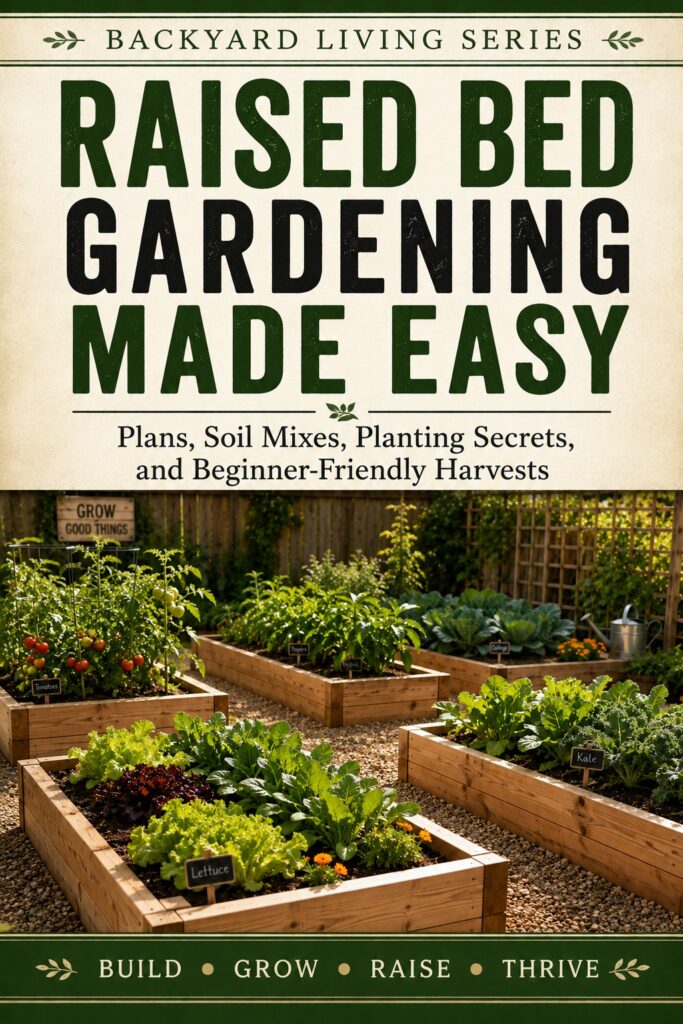
Raised Bed Gardening Made Easy expands on each of these topics with clear, step-by-step guidance designed specifically for beginner gardeners. From planning and building your first raised beds to choosing the best soil, growing healthy vegetables, watering efficiently, managing pests naturally, and extending your harvest season, the book provides practical instruction to help you grow an abundant garden with confidence. 🌱
More Raised Bed Gardening Articles
If you found this article helpful, these beginner guides are a great next step:
Get Your FREE Backyard Starter Toolkit
Download our free Backyard Starter Toolkit, packed with printable planners, checklists, and beginner resources to help you build, grow, raise, and thrive.
About the Author
Steve McChesney is the founder of Backyard Living Books and has spent decades helping homeowners build, grow, raise, and preserve more from their own backyards. Through practical, beginner-friendly guides, he encourages people to tackle one backyard project at a time and enjoy the satisfaction that comes with learning new skills.