
Backyard Learning Center
Learn practical backyard skills one project at a time through beginner-friendly articles, seasonal tips, and step-by-step guides that help you build, grow, raise, and thrive.
5 Raised Bed Gardening Mistakes That Keep You From Harvesting More Food
(July 2026 – Estimated Reading Time: 8 Minutes)
Every gardener dreams of walking into the backyard with a basket and returning to the kitchen with fresh tomatoes, crisp lettuce, peppers, cucumbers, beans, and herbs picked just minutes before dinner.
Yet many first-time gardeners end the season wondering what went wrong.
The tomatoes stayed small.
The lettuce wilted.
The cucumbers barely produced.
The zucchini seemed determined to grow leaves instead of squash.
Here’s the encouraging news.
Most disappointing harvests aren’t caused by bad luck.
They’re usually the result of a handful of common mistakes that are surprisingly easy to fix.
If you’re new to raised bed gardening, avoiding these five pitfalls will dramatically improve your chances of enjoying a productive harvest.
Mistake #1: Building Raised Beds That Are Too Wide
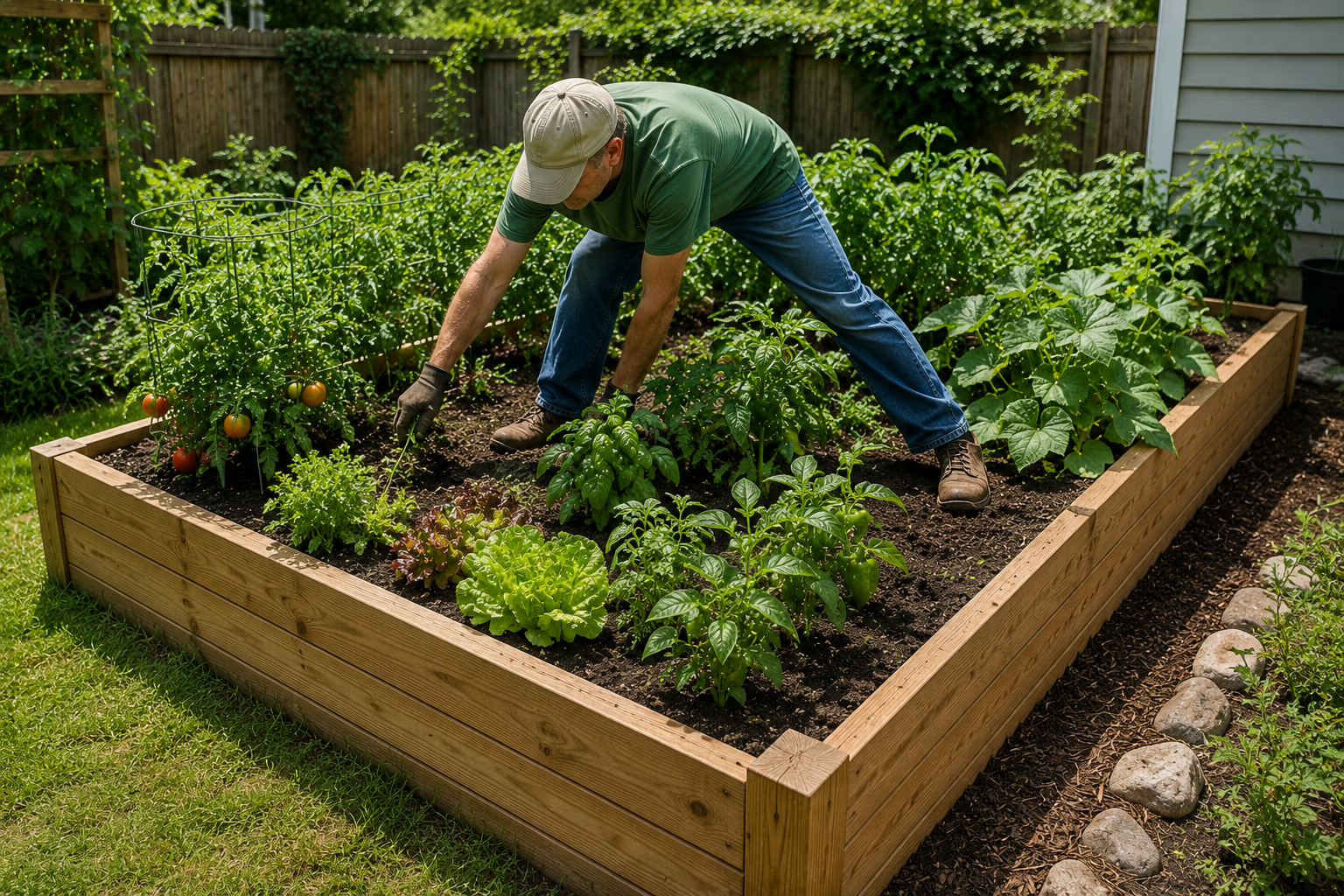
This may not seem like a gardening mistake, but it affects everything that comes afterward.
Many beginners build raised beds as wide as the lumber they’ll be using.
An eight-foot-wide bed might look impressive, but once vegetables begin growing, you’ll quickly discover a problem.
You can’t comfortably reach the middle.
That means you’re forced to step into the bed to pull weeds, harvest vegetables, or prune plants.
Every step compresses the soil.
Compacted soil reduces air pockets around roots, limits drainage, and makes it harder for plants to develop strong root systems.
The solution is simple.
Keep raised beds no wider than about four feet.
At that width, you can comfortably reach the center from either side without ever stepping into the growing area.
Your soil stays loose.
Your roots stay healthy.
Your vegetables grow better.
Mistake #2: Ignoring Sunlight Requirements
You can have perfect soil, excellent watering habits, and healthy seedlings, but if your garden doesn’t receive enough sunlight, your harvest will always be limited.
Most vegetables need at least six to eight hours of direct sunlight every day.
Tomatoes, peppers, cucumbers, beans, squash, and many herbs perform best with even more.
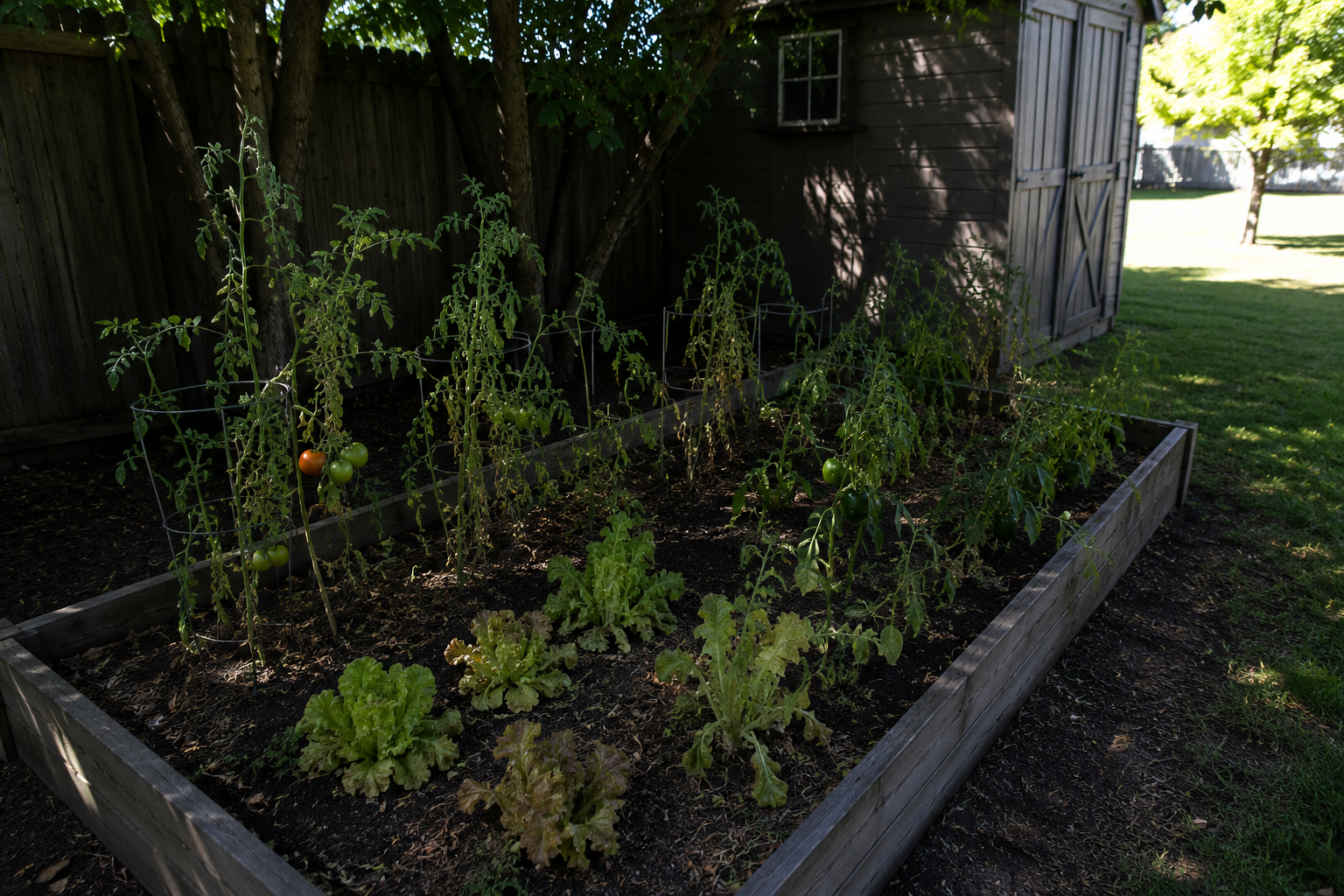
Unfortunately, many gardens are placed wherever space happens to be available rather than where sunlight is most abundant.
Trees grow.
Fences cast longer shadows than expected.
A nearby shed blocks afternoon sun.
The result is tall, weak plants producing fewer vegetables.
Before building your raised bed, spend a day observing your yard.
Notice where sunlight falls in the morning, afternoon, and evening.
Choose the brightest location available.
It’s one decision that will reward you throughout every growing season.
Mistake #3: Planting Too Much in Too Little Space
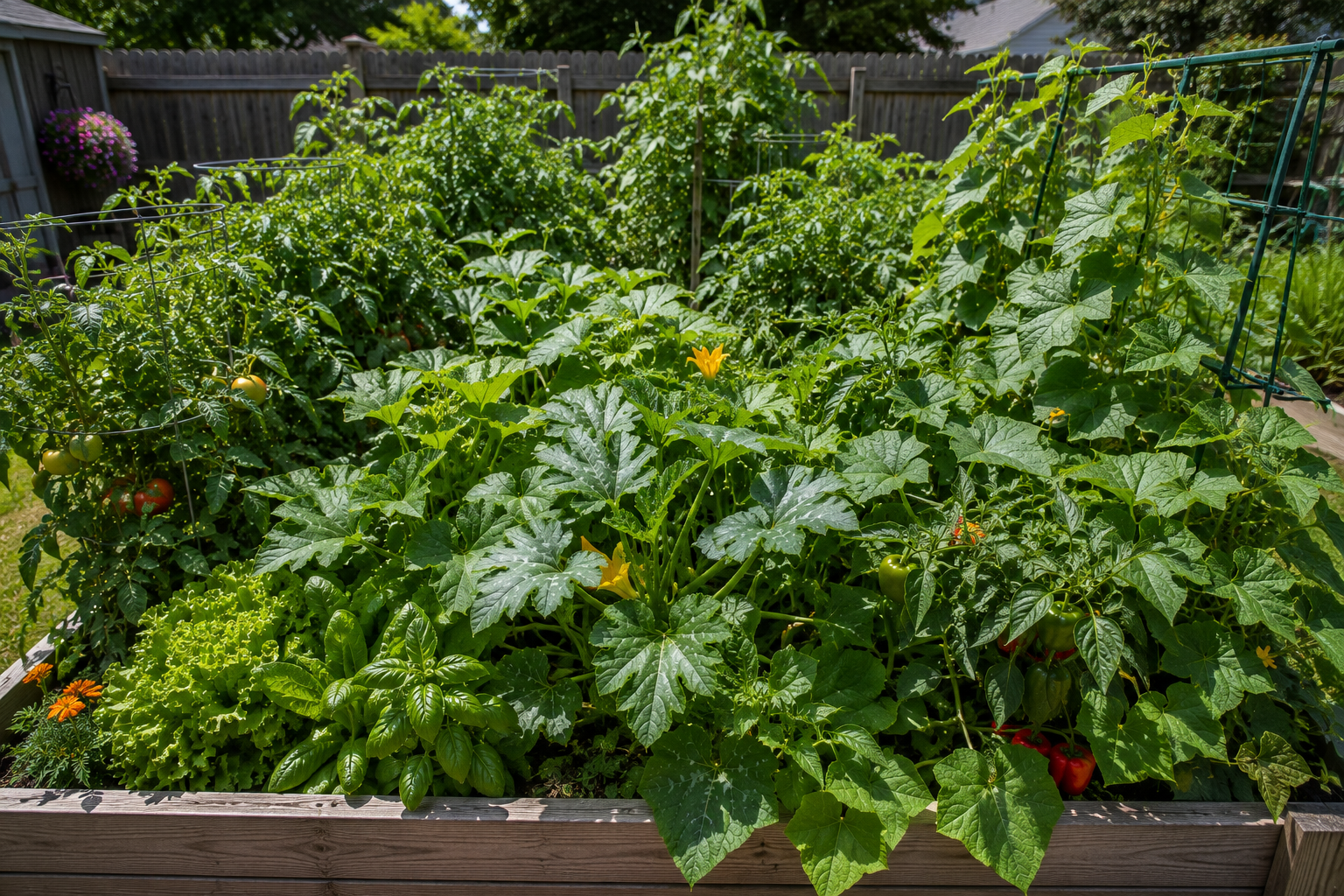
It’s easy to understand the temptation.
A raised bed represents valuable growing space.
Why not fill every square inch?
The answer becomes obvious by midsummer.
Plants compete for sunlight.
Leaves overlap.
Air circulation decreases.
Moisture lingers on the foliage.
Diseases spread more easily.
Harvests actually become smaller instead of larger.
Vegetables need room to mature.
Tomatoes expand far beyond the size of the original seedling.
Zucchini develops enormous leaves.
Cucumbers send vines in every direction.
Proper spacing allows each plant to receive adequate sunlight while promoting healthy airflow throughout the garden.
Resist the urge to squeeze in “just one more plant.”
Your vegetables will thank you with stronger growth and better production.
Mistake #4: Watering the Wrong Way
Watering seems simple.
Turn on the hose.
Spray everything.
Problem solved.
Unfortunately, watering mistakes are among the most common reasons gardens struggle.
Some gardeners water lightly every day.
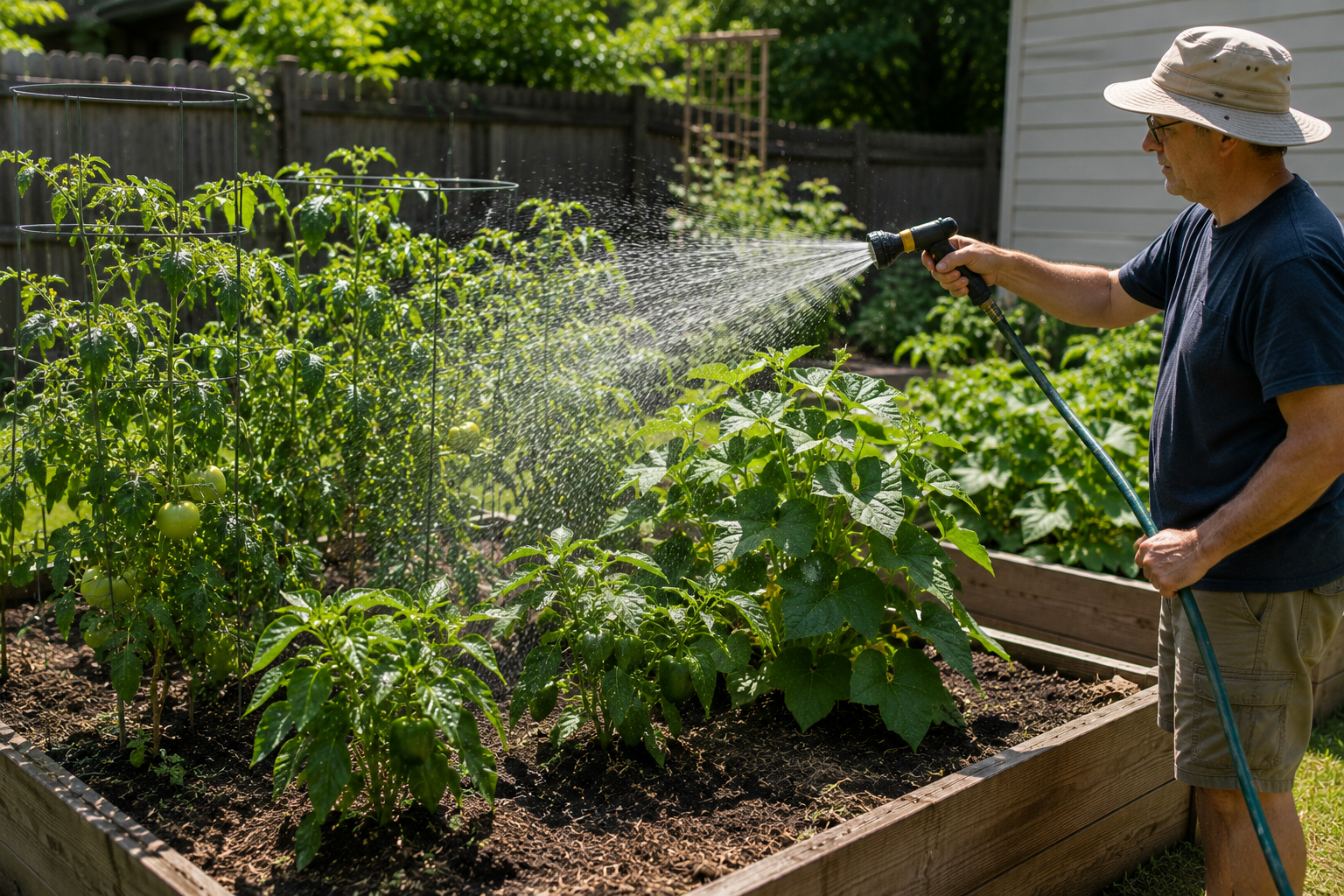
Others wait until plants begin wilting before soaking the bed.
Neither approach produces the healthiest vegetables.
Frequent shallow watering encourages roots to remain near the soil surface where they dry out quickly.
Waiting too long places unnecessary stress on plants, reducing growth and fruit production.
Instead, water deeply whenever the top inch or two of soil begins to dry.
Deep watering encourages roots to grow downward where moisture remains available longer.
Morning is usually the best time to water.
Leaves dry quickly after sunrise, reducing the risk of fungal diseases.
Drip irrigation systems and soaker hoses make watering even more efficient by delivering moisture directly to the root zone instead of spraying the entire garden.
Mistake #5: Forgetting to Feed the Soil
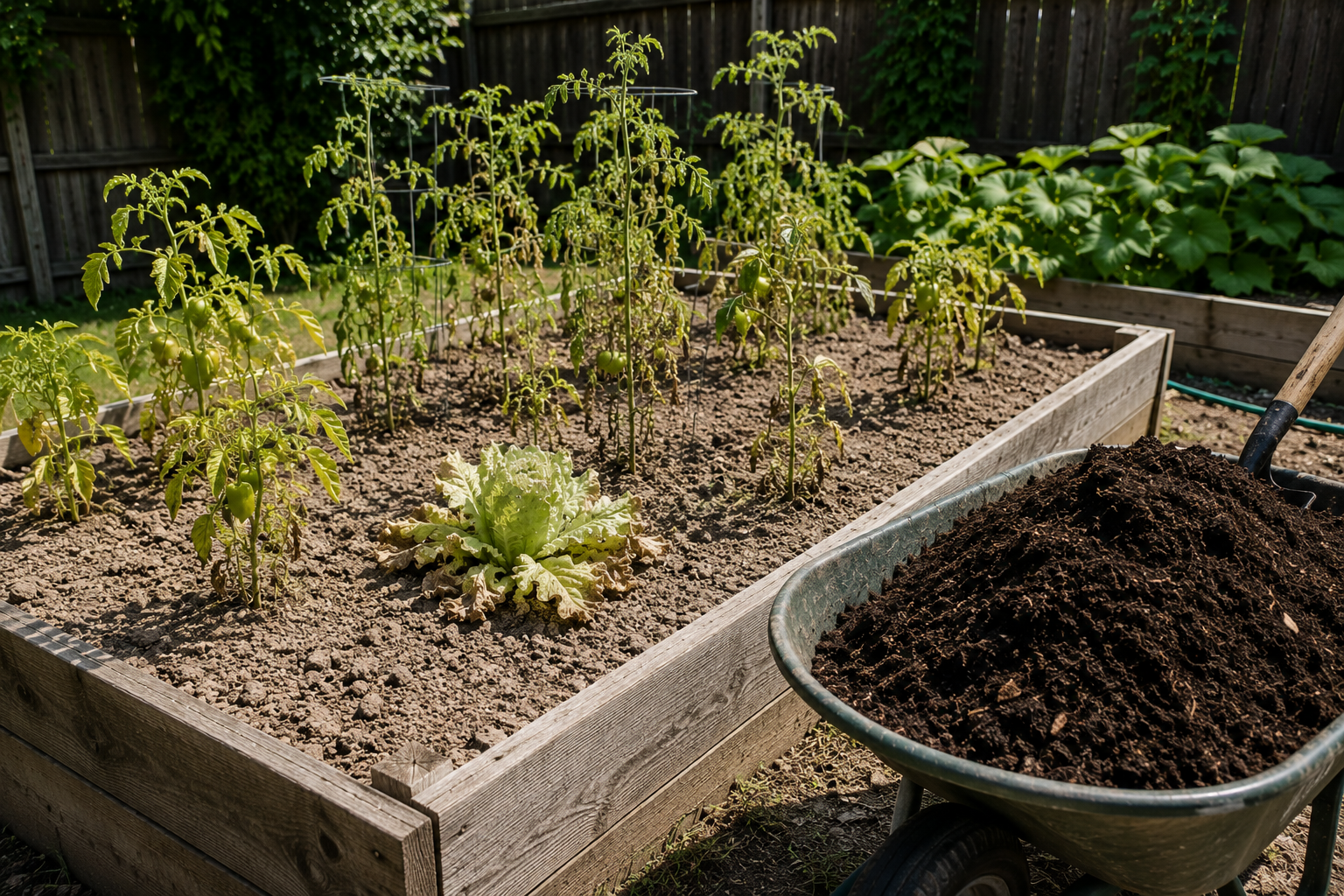
Many beginning gardeners focus entirely on feeding the plants.
Experienced gardeners know the secret is feeding the soil.
Healthy soil contains billions of beneficial organisms working around the clock.
Earthworms loosen the ground.
Bacteria help convert nutrients into forms plants can absorb.
Fungi create underground networks that support healthy root growth.
This living ecosystem depends on organic matter.
Adding compost every year replenishes nutrients while improving soil structure, moisture retention, and biological activity.
Without regular additions of compost or other organic material, raised beds gradually lose fertility as vegetables remove nutrients season after season.
A simple layer of compost each spring can make an enormous difference in the health of your garden.
Bonus Mistake: Planting Everything at Once
Many new gardeners spend one busy Saturday planting every seed and transplant they purchased.
Six weeks later, everything is ready to harvest at the same time.
The lettuce bolts.
The beans all mature together.
The zucchini arrives faster than anyone can eat it.
Instead, stagger your planting.
Plant another row of lettuce every few weeks.
Sow bush beans in several batches.
Continue planting radishes throughout spring and fall.
This technique, called succession planting, provides a steady harvest instead of one overwhelming burst of vegetables.
Bonus Mistake: Skipping Mulch
Mulch often gets overlooked because it doesn’t seem exciting.
In reality, it’s one of the hardest-working parts of the garden.
A layer of straw, shredded leaves, untreated grass clippings, or fine wood chips helps:
- Reduce weeds
- Keep soil cooler during summer
- Hold moisture between waterings
- Prevent soil from splashing onto leaves during rain
- Slowly improve soil as it decomposes
Without mulch, gardeners usually spend more time weeding and watering.
Adding just a few inches can save hours of work throughout the season.
Bonus Mistake: Waiting Too Long to Harvest
Many vegetables taste best when they’re relatively young.
New gardeners often wait because they assume larger means better.
That’s rarely true.
Oversized zucchini become tough.
Cucumbers develop large seeds.
Beans become stringy.
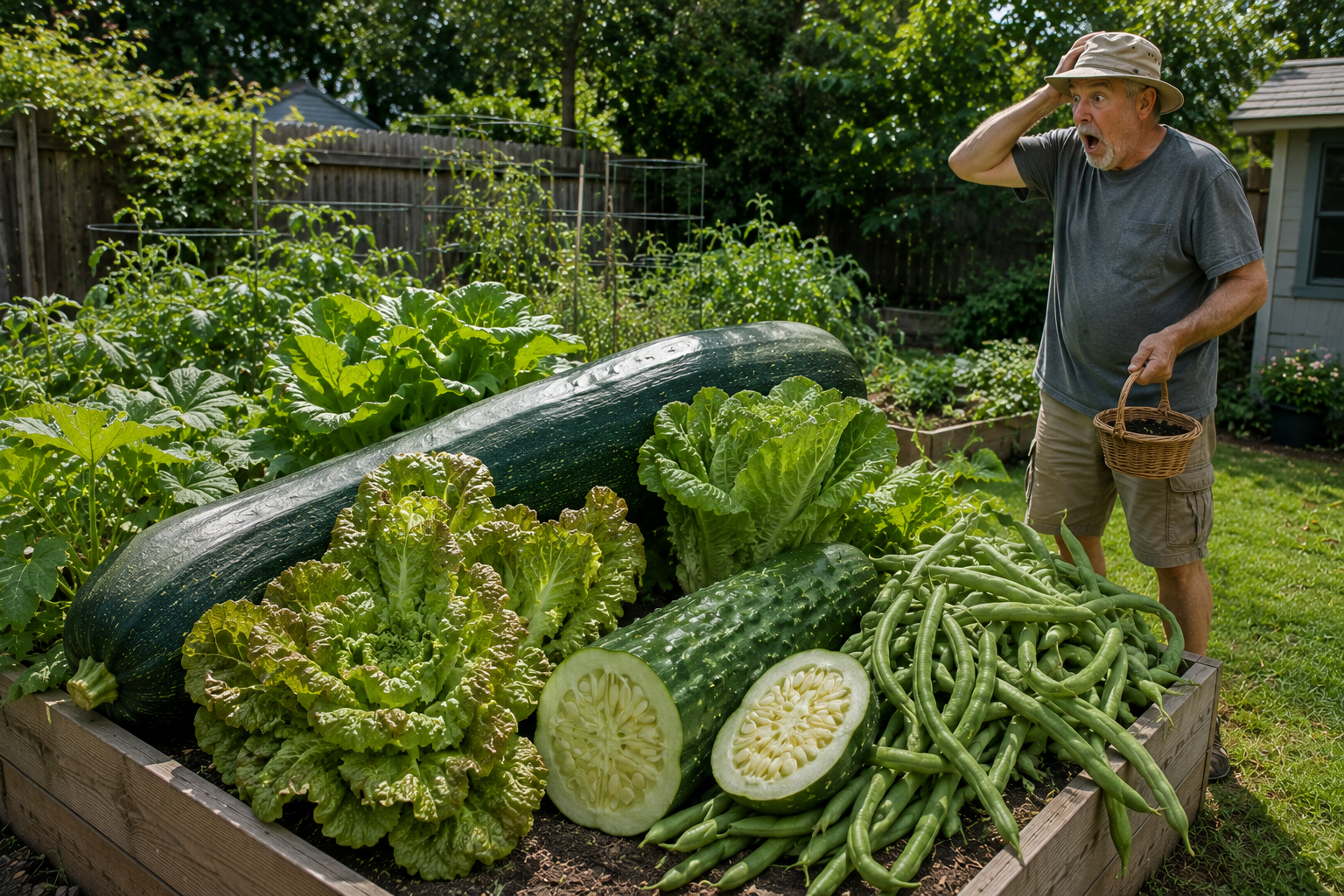
Lettuce turns bitter.
Regular harvesting actually encourages many vegetables to continue producing.
Think of harvesting as part of caring for the plant rather than the end of the growing process.
The more often you pick, the more many plants produce.
Bonus Mistake: Ignoring Problems Until They Spread
Healthy gardens benefit from regular attention.
You don’t need to spend hours inspecting every leaf.
A quick walk through the garden each day is often enough.
Look for:
- Yellowing leaves
- Chewed foliage
- Wilting plants
- Insect activity
- Signs of disease
- Weeds beginning to emerge
Small problems are usually easy to correct.
Large problems often require much more work.
Daily observation allows you to catch issues while they’re still manageable.
Gardening Is a Skill That Improves Every Year
One of the greatest joys of gardening is that every season teaches something new.
Perhaps your tomatoes needed more support.
Maybe your carrots preferred deeper soil.
You might discover that bush beans become one of your favorite crops while eggplant isn’t worth the space in your garden.
Every success builds confidence.
Every mistake becomes experience.
Even lifelong gardeners continue learning.
That’s part of what makes gardening so rewarding.
The Bottom Line
Growing vegetables doesn’t require perfection.
It requires learning a few simple principles and improving a little each season.
Build raised beds you can comfortably reach.
Choose the sunniest location available.
Give plants enough room to grow.
Water deeply and consistently.
Feed the soil with compost every year.
These simple habits solve many of the problems that frustrate beginning gardeners and lay the foundation for healthier plants and larger harvests.
Ready to Grow More with Less Work?
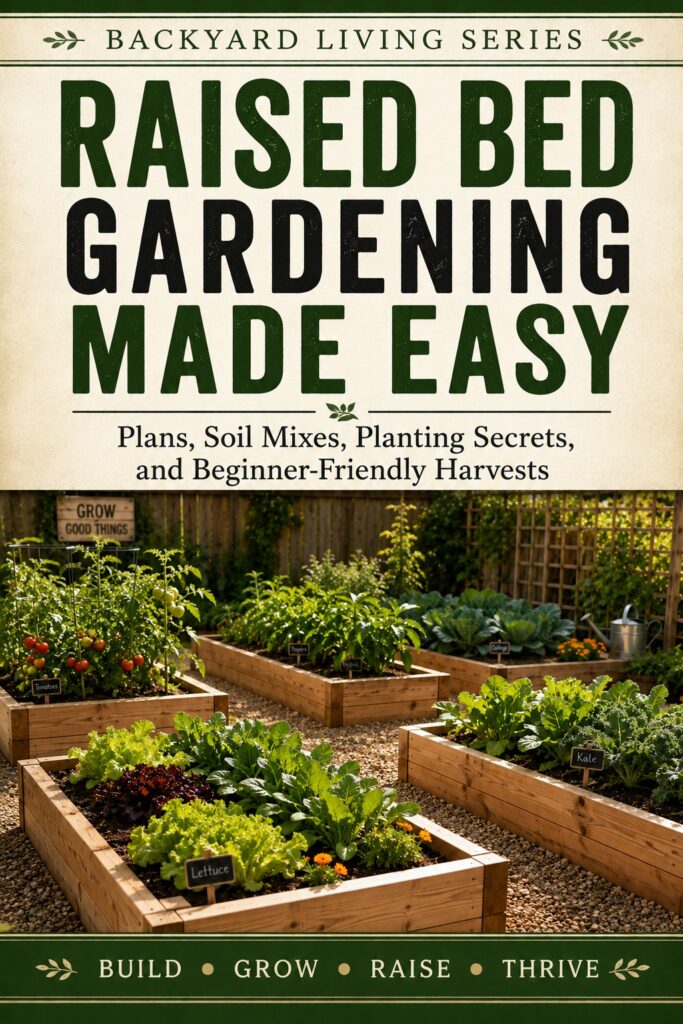
Raised Bed Gardening Made Easy expands on each of these topics with clear, step-by-step guidance designed specifically for beginner gardeners. From planning and building your first raised beds to choosing the best soil, growing healthy vegetables, watering efficiently, managing pests naturally, and extending your harvest season, the book provides practical instruction to help you grow an abundant garden with confidence. 🌱
More Raised Bed Gardening Articles
If you found this article helpful, these beginner guides are a great next step:
Get Your FREE Backyard Starter Toolkit
Download our free Backyard Starter Toolkit, packed with printable planners, checklists, and beginner resources to help you build, grow, raise, and thrive.
About the Author
Steve McChesney is the founder of Backyard Living Books and has spent decades helping homeowners build, grow, raise, and preserve more from their own backyards. Through practical, beginner-friendly guides, he encourages people to tackle one backyard project at a time and enjoy the satisfaction that comes with learning new skills.